-
- BCS
-
Bituminous Coal
Coconut Shell
Sub-Bituminous Coal
-
- B
- Bituminous Coal
-
- C
- Coconut Shell
-
- S
- Sub-Bituminous Coal
-
- LPW
-
Lignite
Peat
Wood
-
- L
- Lignite
-
- P
- Peat
-
- W
- Wood
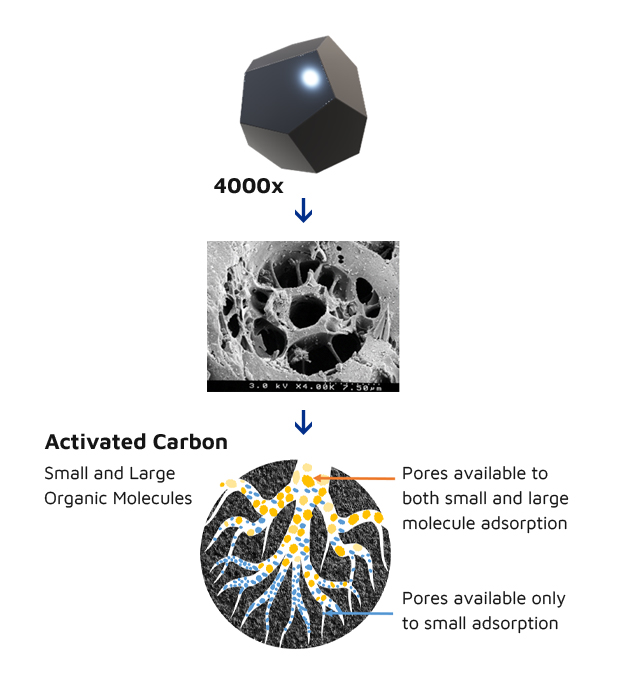
- Activated Carbon – The Most Effective Adsorbent
- Activated carbon began to be used in the 1770s when charcoal or lignite was used for decolorization during the sugar refining process. Since then, it has been widely used as a catalyst and carrier for the treatment of drinking water and industrial water, and for the separation and purification of toxic gases. Activated carbon is a type of carbon that has been processed to increase the surface area and porosity. This makes it an effective adsorbent that can attract and hold other molecules on the surface. Activated carbon is used for various purposes such as water purification, air purification, odor control, and so on.